02
APPLICATIONS / PROCESS FIRST

Start with the production job—not a generic industry label.

Each molding project connects the part, mold, resin, cycle, handling and acceptance criteria. Those variables determine which machine architecture and cell concept deserve a closer look.

PKG01

Packaging & closures

Stable high-output production

Questions that shape the machine
  • Cavity count and runner?
  • Target cycle and output?
  • Part removal and downstream handling?
AUT02

Automotive components

Integrated processing for demanding molds

Questions that shape the machine
  • Part size and material system?
  • Insert, foaming or multi-component?
  • Robot and traceability scope?
TEC03

Technical & electrical parts

A controlled precision process

Questions that shape the machine
  • Tolerance and cosmetic zones?
  • Engineering resin and fillers?
  • Process monitoring required?
HOU04

Household & consumer goods

Flexible cost-per-part production

Questions that shape the machine
  • Product family and mold changes?
  • Color or material change frequency?
  • Automation level?
INS05

Insert & overmolding

Safe, accessible part loading

Questions that shape the machine
  • Manual or robot-loaded inserts?
  • Rotary or shuttle table?
  • Inspection and poka-yoke?
MED06

Medical & clean production

Controlled clean-production planning

Questions that shape the machine
  • Cleanroom class and material?
  • Validation documentation?
  • Traceability and contamination controls?
LOG07

Logistics & large parts

Large mold fit without wasted footprint

Questions that shape the machine
  • Mold size, weight and daylight?
  • Projected area and part removal?
  • Plant access and installation route?
CIR08

Recycled-material processing

A robust process window

Questions that shape the machine
  • Recyclate type and variation?
  • Filtration or venting needs?
  • Quality target and test method?
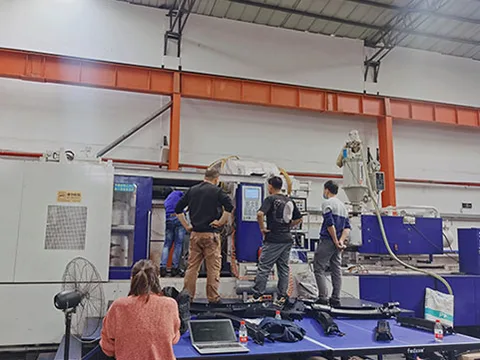
SOURCE IMAGE / WORKSHOP-REVIEW CONTEXT

Use the visible cell to frame questions—not to identify a machine.

The source site's About image shows people reviewing an injection-molding work area. It can prompt questions about access, trial roles, utilities and records, but it cannot establish a current model, owner, factory capacity or performance result.
Evidence to request next
  • A dated, project-specific photo set tied to the quoted machine and configured cell.
  • A trial plan naming the mold, resin, utilities, roles and acceptance checks.
  • A signed record linking measured results to the agreed project revision.
Define the trial evidence
People reviewing an injection molding work area in an image from the Dongguan New Oriental source site's About section
Dongguan New Oriental source imageSource-site About-section workshop context. No current model, ownership, capacity, performance or customer claim is inferred.
FROM APPLICATION TO MACHINE FIT

Carry the production job into the engineering review.

Packaging and other cycle-sensitive applications still need a mold, shot, architecture and complete-cell check before a machine can be shortlisted.

PACKAGING / COMPLETE CELL

Connect the molded part to the installed and accepted cell.

A thin-wall project needs one shared basis for the part, material, mold, thermal system, automation, site services and trial evidence.

PART TO PRODUCTION

Carry application inputs through sizing, material and release.

The same part, mold, resin and cycle basis should support clamp and plasticizing checks, hardware questions, commercial comparison and future changeover planning.

APPLICATION FIT

Two similar parts can need very different cells.

Resin behavior, projected area, mold motion, cavity count, output, part removal and destination requirements all change the answer. Bring those variables into the selection conversation early.

Explore engineering questions
WhatsApp+86 134 1703 0422